When Trauma Doesn't Look Like Trauma

When people hear the word trauma, they often think of a single dramatic event. But trauma isn't always visible. Sometimes it quietly shapes the way we think, feel, and relate to ourselves and others long after the painful experience has passed.
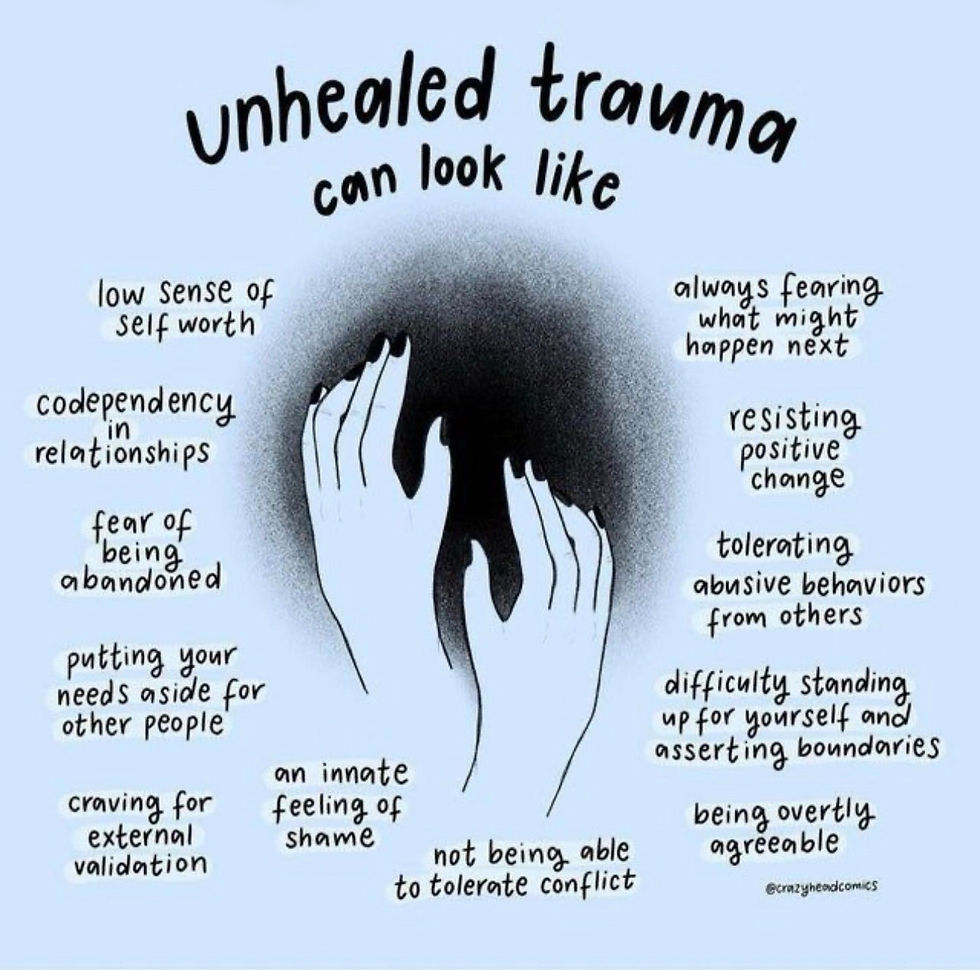
The image highlights a powerful truth: unhealed trauma can show up in everyday behaviors that many people don't immediately recognize as trauma responses.
For some, it may appear as a low sense of self-worth or a persistent feeling that they are never "good enough." Others may find themselves constantly seeking external validation, relying on praise, approval, or reassurance from others to feel secure. These patterns are not signs of weakness; they are often survival strategies developed during difficult experiences.
Unhealed trauma can also affect relationships. Fear of abandonment, codependency, people-pleasing, and difficulty asserting boundaries are common responses. Someone who has learned that their needs were unimportant may struggle to express them. As a result, they may put others first at the expense of their own well-being or tolerate unhealthy behaviors to avoid conflict or rejection.
Another common sign is living in a constant state of anticipation. Trauma can teach the nervous system to stay alert for danger, even when danger is no longer present. This may look like always expecting the worst, worrying about what might happen next, or feeling uncomfortable when life is calm and stable.
The image also points to an often-overlooked symptom: resisting positive change. While this may seem contradictory, familiar pain can feel safer than unfamiliar growth. Healing requires stepping into uncertainty, and for someone carrying unresolved trauma, uncertainty can feel threatening.
Many people with unhealed trauma experience a deep sense of shame. They may believe there is something fundamentally wrong with them rather than recognizing that their reactions developed as a way to cope. This shame can make it difficult to tolerate conflict, stand up for themselves, or trust their own voice.
The encouraging news is that trauma responses are not personality traits—they are learned patterns that can be understood, addressed, and healed. Awareness is often the first step. When individuals begin recognizing their behaviors through a trauma-informed lens, they can replace self-criticism with self-compassion.
Healing does not mean forgetting what happened. It means learning that the past no longer has to control the present. It means developing healthy boundaries, building self-worth from within, and creating relationships that feel safe and supportive.
If you recognize yourself in some of the behaviors shown in this image, remember this: there is nothing wrong with you. Your mind and body learned how to survive difficult experiences. Healing is the process of teaching yourself that survival is no longer the only goal—thriving is possible, too.
The behaviors that once protected you do not have to define your future. Awareness, support, and self-compassion can open the door to lasting healing.


Comments