Understanding Intimate Partner Violence: Recognizing the Signs and Finding a Path to Safety

Intimate Partner Violence (IPV) is a serious public health issue that affects individuals of all ages, genders, socioeconomic backgrounds, and cultures. While many people associate abuse solely with physical violence, IPV encompasses a wide range of behaviors used by one partner to gain power and control over another. Understanding the signs of abuse and knowing where to turn for support can be life-changing for those affected.
What Is Intimate Partner Violence?
Intimate Partner Violence refers to any pattern of behavior within a romantic or intimate relationship that is used to establish or maintain power and control over a partner. IPV can occur in dating relationships, marriages, long-term partnerships, and relationships that have ended.
Abuse may take many forms, including:
Physical Abuse
Hitting, slapping, kicking, or shoving
Strangulation or choking
Preventing someone from seeking medical care
Damaging property or threatening physical harm
Emotional and Psychological Abuse
Constant criticism or humiliation
Manipulation and gaslighting
Isolation from friends and family
Threats, intimidation, or coercion
Sexual Abuse
Pressuring or forcing unwanted sexual activity
Ignoring consent or boundaries
Using guilt, threats, or manipulation to obtain sexual contact
Financial Abuse
Controlling access to money
Preventing a partner from working
Creating financial dependence
Monitoring or restricting spending
Digital Abuse
Monitoring phone calls, texts, or social media accounts
Tracking a partner's location without consent
Using technology to harass, intimidate, or control
Warning Signs of an Abusive Relationship
Abuse often develops gradually, making it difficult to recognize at first. Some common warning signs include:
Feeling afraid of your partner's reactions
Walking on eggshells to avoid conflict
Being cut off from friends, family, or support systems
Constant monitoring of your whereabouts
Frequent jealousy or possessiveness
Having decisions made for you
Being blamed for your partner's behavior
Experiencing threats, intimidation, or controlling behaviors
It is important to remember that healthy relationships are built on trust, respect, communication, and mutual support—not fear or control.
The Impact of Intimate Partner Violence
The effects of IPV extend far beyond visible injuries. Survivors may experience:
Mental Health Effects
Anxiety
Depression
Post-traumatic stress disorder (PTSD)
Low self-esteem
Difficulty trusting others
Physical Health Effects
Chronic pain
Sleep disturbances
Gastrointestinal issues
Increased risk of injury
Long-term health complications related to stress and trauma
Social and Emotional Effects
Isolation from loved ones
Difficulty maintaining employment
Challenges in parenting and family relationships
Loss of confidence and independence
The impact of abuse can linger long after a relationship ends, making trauma-informed support essential for healing.
Why Leaving Isn't Always Easy
A common misconception is that survivors can "just leave." In reality, many barriers may make leaving difficult, including:
Fear of retaliation or increased violence
Financial dependence
Concerns about children
Cultural or religious pressures
Lack of housing or resources
Emotional attachment to the partner
Hope that the abuse will stop
Leaving an abusive relationship is often a process rather than a single event. Survivors deserve compassion, not judgment.
Healing Is Possible
Recovery from intimate partner violence is not linear, but healing is possible. Therapy, support groups, advocacy services, and strong social connections can help survivors rebuild safety, confidence, and self-worth.
Trauma-informed counseling can provide a space to:
Process difficult experiences
Develop healthy coping skills
Rebuild self-esteem
Establish boundaries
Create healthier relationship patterns
Every survivor's journey is unique, and healing happens at their own pace.
Reaching Out for Help
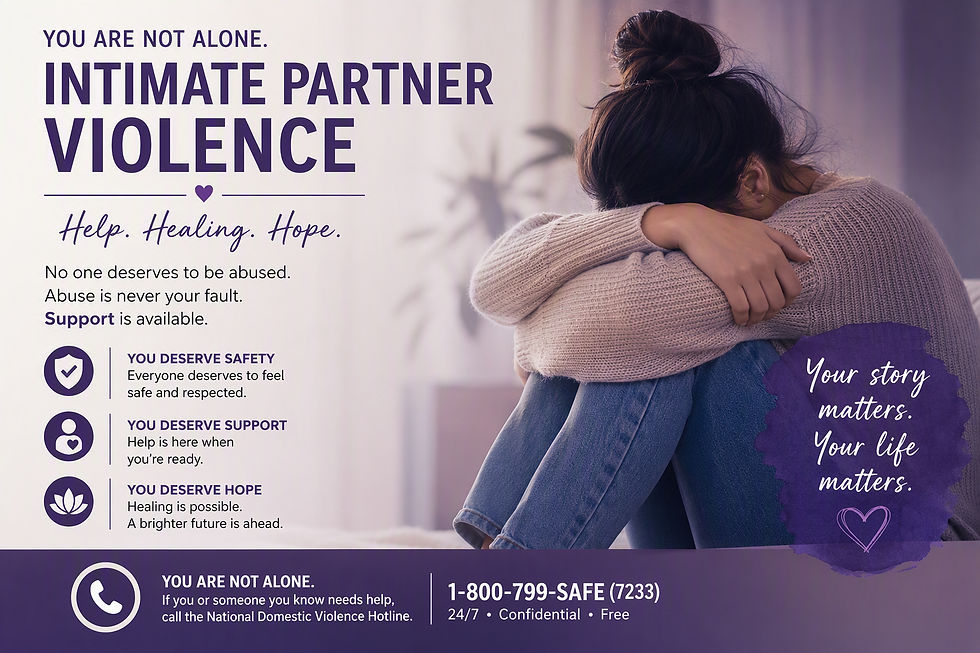
If you or someone you know is experiencing intimate partner violence, know that support is available. Reaching out can be the first step toward safety and healing.
You deserve relationships built on respect, trust, and compassion. Abuse is never your fault, and you do not have to face it alone.


Comments