ADHD: Looking Beyond the Stereotypes

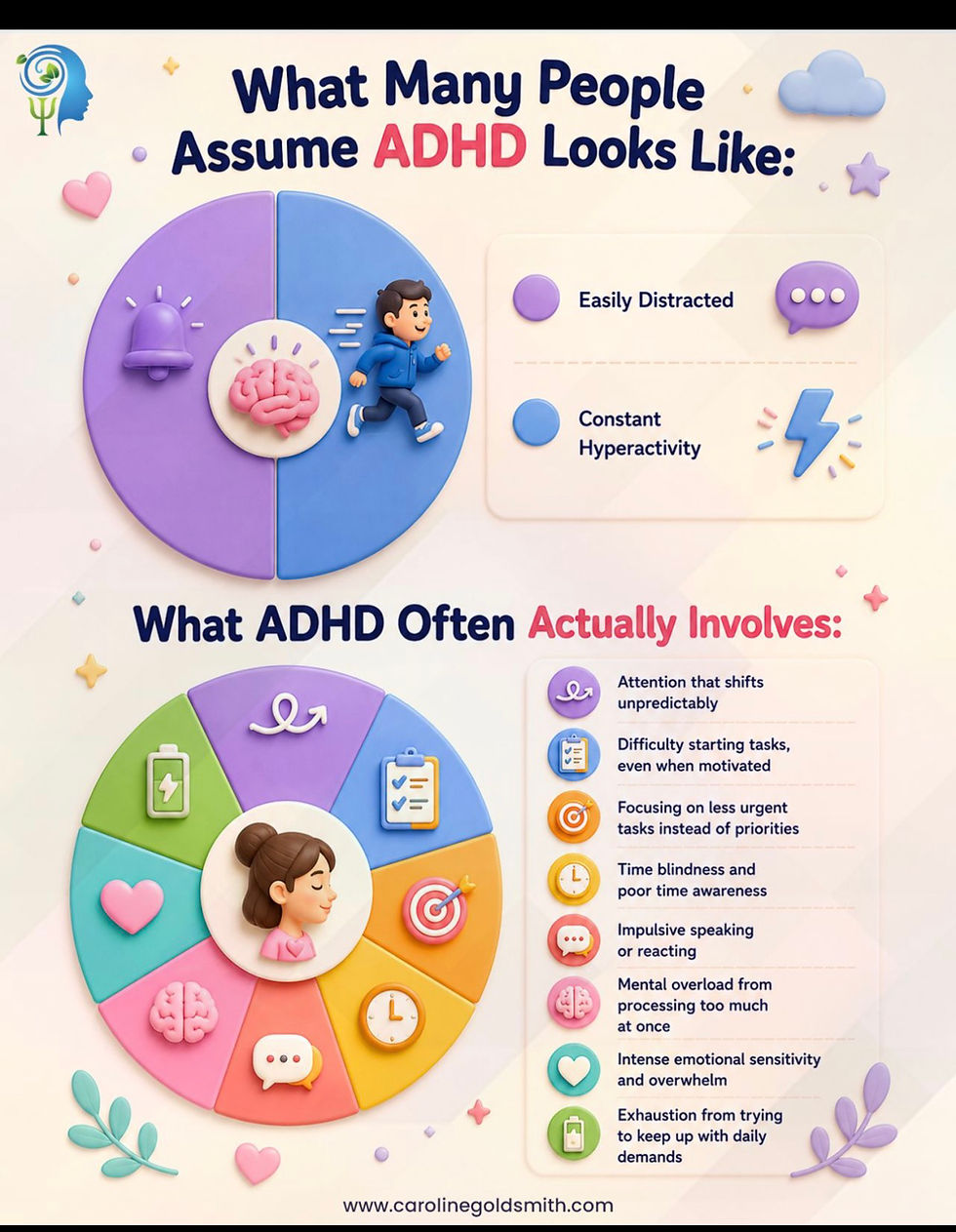
When most people think about ADHD, they picture someone who is constantly moving, easily distracted, or unable to sit still. While those traits can be part of the experience, they only tell a small part of the story.
The reality is that ADHD is often less about a lack of attention and more about challenges with managing attention, emotions, time, and daily responsibilities. Many individuals with ADHD work incredibly hard just to keep up with demands that others may take for granted.
ADHD can show up in ways that aren't always visible. One moment, attention may be laser-focused on a topic of interest; the next, even a simple task can feel impossible to start. This isn't laziness or a lack of motivation—it's often a struggle with executive functioning, the mental skills that help us plan, organize, prioritize, and follow through.
Many people with ADHD experience:
Attention that shifts unpredictably
Difficulty getting started on tasks, even when they want to complete them
Challenges prioritizing what needs immediate attention
"Time blindness," or difficulty accurately gauging the passage of time
Impulsive speaking or reacting
Mental overload from processing multiple thoughts at once
Deep emotional sensitivity and overwhelm
Exhaustion from constantly trying to stay organized and meet expectations
These experiences can impact work, relationships, self-esteem, and overall well-being. Unfortunately, because many of these challenges happen internally, they are often misunderstood by others—and sometimes by the individuals experiencing them themselves.
One of the most important things we can do is move away from stereotypes and toward understanding. ADHD presents differently from person to person, and no two experiences are exactly alike. What may look like procrastination could actually be executive dysfunction. What may seem like forgetfulness could be an overwhelmed brain trying to manage too many competing demands.
Compassion, education, and appropriate support can make a significant difference. Whether through therapy, coaching, accommodations, medication, or lifestyle strategies, people with ADHD can learn tools that help them thrive—not by changing who they are, but by working with the way their brains are wired.
The next time you think about ADHD, remember: the most significant struggles are often the ones no one can see. By looking beyond the assumptions, we create space for greater empathy, understanding, and support.
ADHD is not simply about being distracted or hyperactive—it's about navigating a world that often wasn't designed for the way some brains work. And everyone deserves the opportunity to be understood.


Comments